Guides
Immigration Medical Exam for Refugee Claimants in Canada: IFHP Coverage, Required Documents, and What to Expect
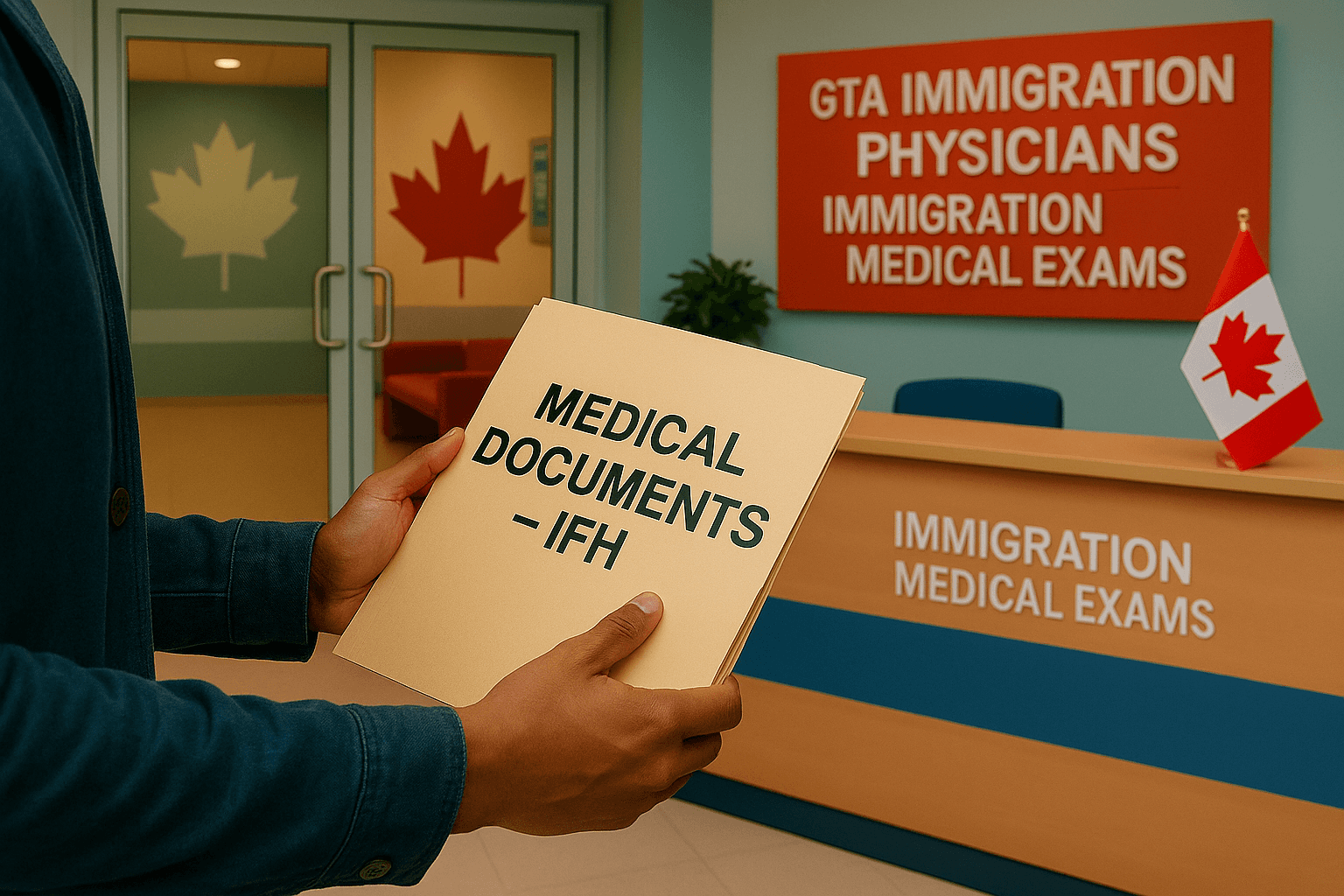
A clear, friendly guide for refugee claimants completing their IRCC Immigration Medical Exam. Learn what documents you need, how IFHP coverage works, and what to expect at our clinic.
Refugee claimants in Canada must complete an IRCC Immigration Medical Exam as part of their refugee claim process. For many newcomers, this requirement raises common questions such as: Is the exam free for refugees? What documents do I need? How does IFHP coverage work? How long does the exam take?
This guide provides a full explanation of the refugee medical exam requirements in Canada, including IFHP eligibility, mandatory documents, timelines, and how the exam is completed at GTA Immigration Physicians in North York, Toronto, where same-day appointments, next-day appointments, Saturday availability, and walk-ins are offered for refugee clients.
Throughout this guide, one point must be emphasized repeatedly for clarity: IFHP covers the immigration medical exam only if the claimant brings the correct documents and has active IFHP coverage. Claimants are responsible for bringing the proper paperwork so that their coverage can be applied. It is also important to know that IFHP covers only one immigration medical exam per person in Canada, and any repeat or follow-up exam requested by IRCC is private-pay.
This article is designed to answer all questions refugee claimants typically search for online and to help increase clarity, reduce delays, and ensure full preparedness for the appointment.
Who Needs an Immigration Medical Exam as a Refugee Claimant in Canada
All refugee claimants in Canada are required to complete an IRCC Immigration Medical Exam, including:
• Inland refugee claimants
• Government-assisted refugees (GAR)
• Privately sponsored refugees (PSR)
• Dependent's listed on a refugee claim
IRCC uses the exam to determine medical admissibility and assess public health requirements. Refugee claimants searching for broader IRCC medical exam requirements can review Who Needs an Immigration Medical Exam in Canada? Full Guide by Visa Type, Age, and IRCC Rules.
Some claimants receive an IMM 1017 medical request letter, while others complete an exam before receiving the request. In all cases, documentation is essential for IFHP coverage.
IFHP Coverage for Refugee Medical Exams: What Refugees Claimants Need to Know
The Interim Federal Health Program (IFHP) provides temporary health benefits to refugee claimants in Canada. IFHP can cover the full cost of the Immigration Medical Exam, including:
• The panel physician medical assessment
• The chest X-ray (for ages 11+)
• Required blood tests (for ages 15+)
However, two key IFHP rules apply nationwide:
1. IFHP covers the exam only when the claimant brings the correct paperwork.
The claimant must present required documents to demonstrate eligibility.
2. IFHP covers only one Immigration Medical Exam per person in Canada.
If IRCC later requests another exam, surveillance testing, or updated medicals, these follow-up exams must be paid privately.
These rules are set at the federal level and apply to all clinics across Canada.
Required Documents Refugee Claimants Must Bring (Essential for Coverage)
To ensure IFHP coverage applies to the Immigration Medical Exam, every refugee claimant must bring:
IMM 1442 Refugee Claimant Document OR Acknowledgement of Claim
IMM 1442 Refugee Claimant Document: A brown paper document with the claimant’s photograph. This is the primary proof of refugee claimant status.
Acknowledgement of Claim: Some claimants receive this document instead of the IMM 1442. It is equally valid.
Government-issued identification
If available, bring a passport, national ID, or similar document. If not, the IMM 1442 typically serves as identification.
IRCC medical request letter (if provided)
If IRCC issued an IMM 1017 medical request, it should be brought to the appointment.
IFHP coverage cannot be applied without these documents. Refugee clients arriving without proper paperwork must privately pay for their medical exam, and IFHP does not apply retroactively under federal rules.
For a detailed preparation guide, refugee claimants can refer to What to Bring to Your Immigration Medical Exam in Canada.
What the Refugee Immigration Medical Exam Includes (IRCC Requirements)
All refugee claimants complete the standard IRCC-mandated medical examination, which includes:
Medical history and physical examination
A panel physician reviews the client’s medical history and conducts a physical exam for all ages.
Chest X-ray
Required for clients aged 11 and older. With proper documents, the X-ray is covered through IFHP.
Blood tests
Required for clients aged 15 and older. Covered under IFHP when eligibility is confirmed.
More detail on IRCC testing requirements is available in the resource, Medical Tests Done During an Immigration Medical Exam in Canada (2025 IRCC Requirements).
GTA Immigration Physicians completes all components on-site to reduce delays and streamline the visit.
Step-by-Step Process for Refugees at GTA Immigration Physicians
The clinic’s process is designed to support refugee claimants and ensure a smooth, efficient appointment.
1. Arrival and check-in
Same-day, next-day, Saturday appointments, and walk-ins are available. Claimants must bring required IFHP documents.
2. Document verification
Staff confirm that IFHP coverage can be applied based on the claimant’s paperwork.
3. Medical examination
A panel physician completes the exam and records all findings in IRCC’s eMedical system.
4. On-site testing
Chest X-ray and blood tests are completed in the clinic’s facility.
5. Submission to IRCC
The clinic submits all results electronically through eMedical once complete.
Most refugee claimants finish the full process in 2 to 2.5 hours, depending on clinic volume. For a full timeline overview, see How Long Does the IRCC Immigration Medical Exam Take? Full Timeline Guide for Canada.
What Happens if a Refugee Claimant Does Not Bring the Required Documents
IFHP coverage will not apply without:
• The IMM 1442 (brown paper with photo) or Acknowledgement of Claim
• Identification
• Active IFHP eligibility
In these cases, the exam must be privately paid.
IFHP does not allow coverage to be applied after the fact.
If IRCC later requests a repeat or updated medical exam, that exam must also be privately paid because IFHP covers only one Immigration Medical Exam per person.
Do Family Members Need Their Own Documents for IFHP Coverage?
Yes. Each person undergoing the medical exam must bring their own proof of eligibility. Documentation cannot be shared within a family, and IFHP eligibility is assessed individually for each claimant.
If one family member lacks the correct documents, IFHP coverage cannot be applied for that individual.
How Refugee Claimants Should Prepare for Their Medical Exam
To avoid delays and ensure IFHP coverage applies, refugee claimants should:
• Bring the IMM 1442 (brown paper with photo) or Acknowledgement of Claim
• Bring government-issued identification
• Bring the IMM 1017 request letter if available
• Ensure all dependent's have their own documents
• Wear comfortable clothing for the X-ray
• Arrive early for walk-ins or confirm same-day availability
A full checklist is available in What to Bring to Your Immigration Medical Exam in Canada.
Common Questions Refugees Claimants Have About the Immigration Medical Exam
Is the Immigration Medical Exam free for refugees in Canada?
Yes, when the claimant brings the correct documents and has active IFHP eligibility. Without proper paperwork, the exam must be privately paid.
Does IFHP cover repeat medical exams?
No. IFHP covers only one Immigration Medical Exam per person in Canada.
Does a refugee need a medical request letter (IMM 1017)?
Not always. The key document is the IMM 1442 or Acknowledgement of Claim.
How long does the exam take at GTA Immigration Physicians?
Most clients finish in 2 to 2.5 hours.
Where can I find pricing for non-IFHP clients?
Clients paying privately can view the clinic’s exam pricing information.
Why Refugees Claimants Choose GTA Immigration Physicians
• Same-day and next-day appointments
• Walk-ins accepted
• Saturday availability
• On-site X-ray and blood testing
• Convenient location in Fairview Mall, North York
• Experienced IRCC panel physicians
• Clear explanation of IFHP rules
• Fast, supportive process designed for refugee claimants
The clinic provides a structured, welcoming experience for clients completing their first IRCC medical exam in Canada.
Important Notes About IFHP and IRCC Requirements
Refugee claimants must complete an Immigration Medical Exam as part of their IRCC claim. IFHP covers the exam only when the claimant presents the correct documents and has active eligibility. Under national IFHP rules, coverage applies once per person, and any repeat or follow-up exam must be paid privately.
While GTA Immigration Physicians supports clients through the exam process, IRCC medical requirements and IFHP rules are determined at the federal level.
Disclaimer
This information is for general guidance only and should not be considered immigration advice. Clients should consult their immigration lawyer or a licensed immigration consultant for advice specific to their situation.