Guides
TR to PR Pathway Canada Explained | Temporary Resident to Permanent Resident

Learn what the TR to PR pathway means in Canada, how temporary residents can move toward permanent residence, and when an immigration medical exam may be required. GTA Immigration Physicians in North York, Toronto provides IRCC-approved panel physician medical exams for TR to PR, Express Entry, work permit, study permit, and permanent residence applicants across the GTA.
The TR to PR pathway is one of the most searched immigration topics in Canada. Many people living in Canada as temporary residents want to understand how they may become permanent residents, what programs may apply to them, and whether they need an immigration medical exam from an IRCC-approved panel physician.
TR to PR means Temporary Resident to Permanent Resident. In simple terms, it describes the process of moving from temporary status in Canada to permanent resident status. A temporary resident may be an international student, post-graduate work permit holder, temporary foreign worker, work permit holder, study permit holder, visitor, caregiver, healthcare worker, or another person legally staying in Canada for a limited time.
A permanent resident has been approved by Immigration, Refugees and Citizenship Canada, also known as IRCC, to live in Canada permanently.
At GTA Immigration Physicians in North York, Toronto, we regularly see clients who are applying for permanent residence after first living in Canada as temporary residents. Many of these clients are completing an immigration medical exam for Express Entry, Canadian Experience Class, Provincial Nominee Programs, work permit-related permanent residence streams, family applications, or other TR to PR-related pathways.
This guide explains what the TR to PR pathway means, why Canada uses temporary resident to permanent resident pathways, who may be interested in them, and how the immigration medical exam fits into the process.
What Does TR to PR Mean in Canada?
TR to PR stands for Temporary Resident to Permanent Resident.
A temporary resident is someone who is allowed to stay in Canada for a specific period of time. This may include someone with a work permit, study permit, visitor record, post-graduate work permit, or other temporary immigration status.
A permanent resident is someone who has been approved to live in Canada permanently. Permanent residents can usually live, work, and study anywhere in Canada, access many public services, and may later become eligible to apply for Canadian citizenship.
When people search for “TR to PR pathway Canada,” they are usually looking for a way to move from temporary status to permanent residence. This may include moving from a study permit to permanent residence, a work permit to permanent residence, a post-graduate work permit to permanent residence, or temporary foreign worker status to permanent residence.
The exact pathway depends on the client’s background, immigration status, work experience, education, language scores, occupation, province, family situation, and current IRCC rules.
For many clients, TR to PR is not one single step. It is a process. It may involve gaining Canadian work experience, improving language scores, applying through Express Entry, receiving a provincial nomination, submitting a permanent residence application, and completing an immigration medical exam with an approved panel physician.
Why Does Canada Use TR to PR Pathways?
Canada uses TR to PR pathways because many temporary residents are already contributing to the country before they become permanent residents.
Many temporary residents are already working in Canada. Others have completed Canadian education, gained Canadian work experience, paid taxes, improved their English or French, and settled into local communities. Some are working in high-demand sectors such as healthcare, education, caregiving, construction, transportation, hospitality, technology, agriculture, and skilled trades.
From Canada’s perspective, these applicants may already have strong connections to the country. They may be easier to integrate because they already understand Canadian workplaces, Canadian communities, and Canadian systems.
This is one reason programs such as the Canadian Experience Class are so important. The Canadian Experience Class is designed for people with skilled Canadian work experience. Provincial Nominee Programs may also help provinces keep workers who are already filling local labor needs.
For applicants, the TR to PR pathway can provide long-term security. Temporary status can feel uncertain, especially when work permits or study permits have expiry dates. Permanent residence can allow people to plan their future, continue their careers, support their families, and build a long-term life in Canada.
Why Is the TR to PR Pathway Important?
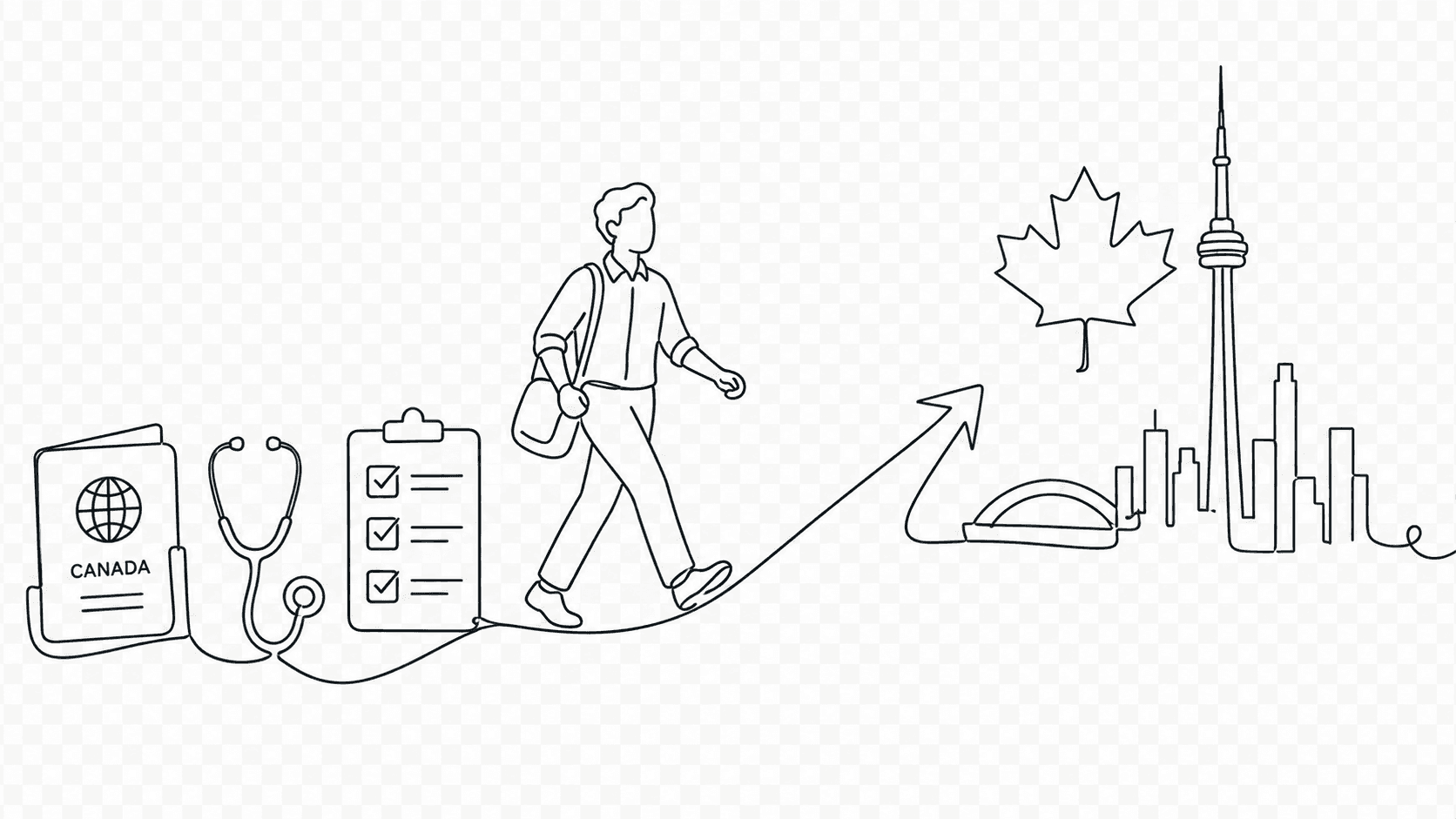
The TR to PR pathway is important because many people do not arrive in Canada as permanent residents right away.
A common immigration journey may look like this:
A client comes to Canada as an international student
The client completes a Canadian program of study
The client receives a post-graduate work permit
The client gains Canadian work experience
The client applies for permanent residence
The client completes an immigration medical exam
IRCC reviews the application and medical results
Another client may come to Canada as a temporary foreign worker, gain experience in an in-demand occupation, receive provincial support, and then apply for permanent residence.
These examples show why TR to PR pathways matter. Canada’s immigration system often allows people to build their eligibility over time. Temporary residence may be the first stage. Permanent residence may be the long-term goal.
For many people, the immigration medical exam is one of the required steps before IRCC can finalize the permanent residence process.
Who Is Usually Searching for the TR to PR Pathway?
The TR to PR pathway is most relevant to people who are already in Canada and want to stay permanently.
Common examples include:
International students who want to become permanent residents after graduation
Post-graduate work permit holders gaining Canadian work experience
Temporary foreign workers with Canadian employment history
Healthcare workers looking for permanent residence options
Caregivers working in Canada
Skilled workers applying through Express Entry
Workers nominated by a province
Applicants waiting for an IRCC medical request
People who have received an IMM 1017 form
Permanent residence applicants who need an immigration medical exam
Many of these applicants eventually need to complete an immigration medical exam with an IRCC-approved panel physician. If you are unsure whether you need a medical exam, our guide on who needs an immigration medical exam in Canada explains the requirements by visa type, age, occupation, and IRCC rules.
Common TR to PR Pathways in Canada
There is no single pathway that works for everyone. The correct route depends on your status, work experience, education, language scores, occupation, province, family situation, and current IRCC rules.
Express Entry
Express Entry is one of the most common routes from temporary resident to permanent resident. It manages applications for several federal economic immigration programs, including the Canadian Experience Class, Federal Skilled Worker Program, and Federal Skilled Trades Program.
Many people in Canada use Express Entry because they may already have Canadian education, Canadian work experience, and language test results. Some applicants complete an upfront immigration medical exam as part of their permanent residence process.
If you are applying through Express Entry, read our guide on the upfront medical exam for Express Entry applicants in Canada.
Canadian Experience Class
The Canadian Experience Class, also called CEC, is one of the most important TR to PR routes. It is designed for applicants who have skilled Canadian work experience and meet other program requirements.
This pathway is especially relevant for post-graduate work permit holders, international graduates, and skilled workers already employed in Canada.
Provincial Nominee Programs
Provincial Nominee Programs, or PNPs, allow provinces and territories to nominate applicants who meet local labor market needs. A province may want to retain workers in healthcare, trades, technology, transportation, childcare, rural communities, or other priority sectors.
For many temporary residents, a provincial nomination can be a major step toward permanent residence.
Employer-Supported and Occupation-Based Pathways
Some temporary residents may qualify through employer-supported or occupation-specific immigration programs. These may involve healthcare workers, caregivers, construction workers, agricultural workers, transportation workers, or other in-demand occupations.
These programs can change, so applicants should always check the latest IRCC or provincial instructions and seek specialist immigration advice.
Where Does the Immigration Medical Exam Fit Into TR to PR?
For many permanent residence applicants, the immigration medical exam is a required part of the process.
An immigration medical exam is not the same as a regular checkup with your family doctor. It must be completed by an IRCC-approved panel physician. The panel physician performs the required medical assessment and submits the results electronically to IRCC through eMedical.
GTA Immigration Physicians is an IRCC-approved panel physician clinic located in North York, Toronto. We complete immigration medical exams for permanent residence applicants, Express Entry applicants, TR to PR applicants, work permit holders, international students, visitors, and refugee claimants.
The exact medical requirements can depend on the applicant’s age, application type, medical history, and IRCC instructions. For more detail, read our guide on medical tests done during an immigration medical
Upfront Medical Exam vs Medical Request Letter
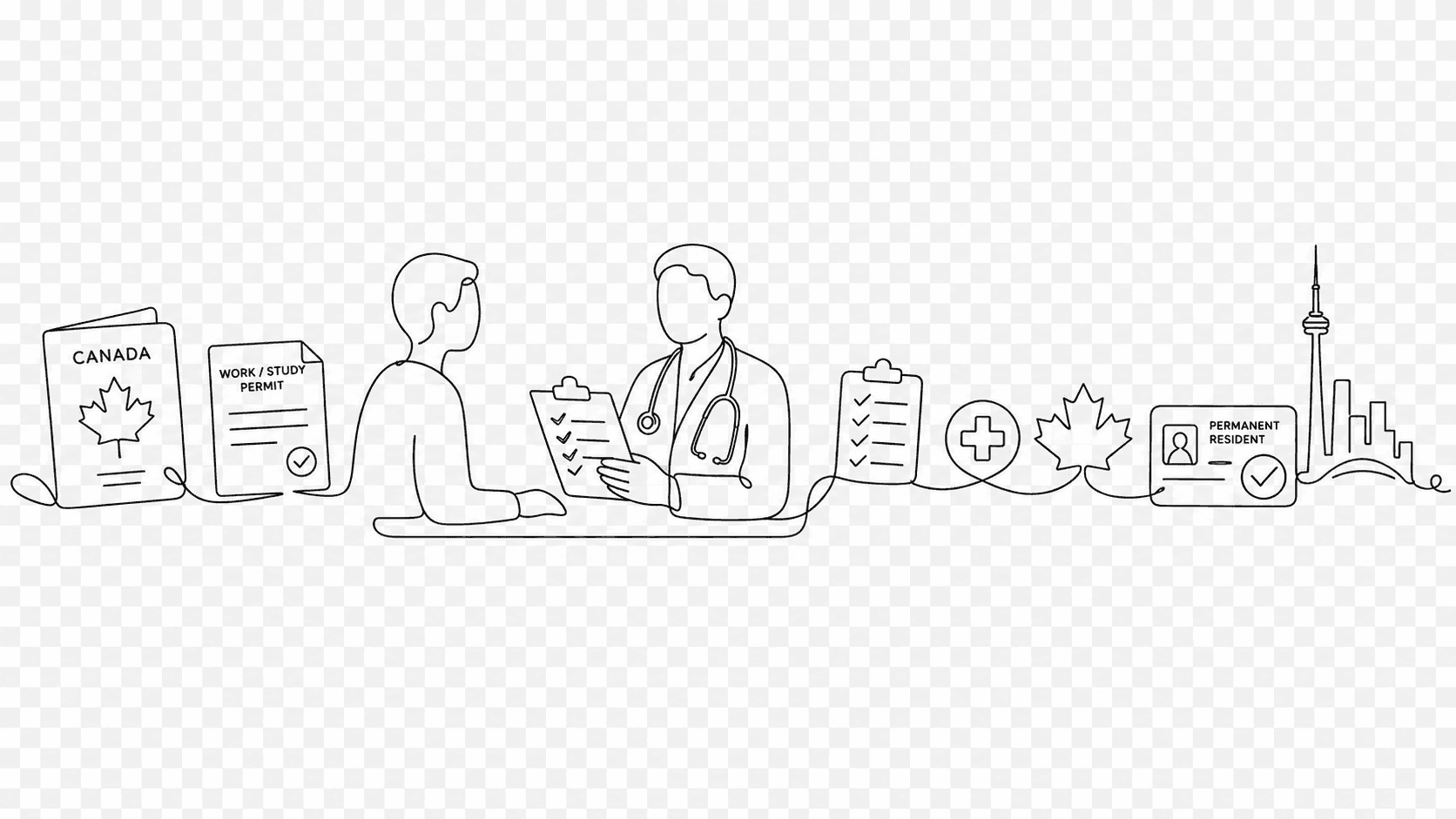
TR to PR applicants may come for an immigration medical exam in two different ways.
Some applicants complete an upfront medical exam. This means they attend a panel physician before IRCC sends a medical request letter. After the exam, the clinic provides proof of completion that the applicant can submit to IRCC.
Other applicants wait until IRCC sends a medical request letter. This may include an IMM 1017 form. If you receive an IMM 1017 form, bring it to your appointment so the panel physician can link your medical exam correctly.
Both situations are common. The right option depends on your application type and IRCC instructions.
What Should TR to PR Applicants Bring to the Medical Exam?
If you are applying for permanent residence through a TR to PR-related pathway, it is important to bring the correct documents to your immigration medical exam.
You should usually bring your passport or valid government-issued photo identification, any IRCC medical request letter, your IMM 1017 form if you have one, a list of medications, glasses or contact lenses if you use them, and any relevant medical reports.
If you have a known medical condition, previous surgery, specialist history, abnormal chest X-ray, tuberculosis history, HIV, kidney disease, heart disease, cancer history, or other significant medical issue, bring any available reports. This can help the panel physician complete your immigration medical exam accurately and may reduce delays.
For a full checklist, see what to bring to your immigration medical exam in Canada.
GTA Immigration Physicians offers same-day and next-day appointments, Saturday availability, walk-in options, on-site testing, on-site parking, and easy TTC access. This is helpful for applicants across Toronto, North York, Scarborough, Markham, Richmond Hill, Vaughan, Brampton, Mississauga, Pickering, Ajax, Whitby, and the wider GTA.
For more information, read how long the IRCC immigration medical exam takes.
Why Choose GTA Immigration Physicians for a TR to PR Medical Exam?
GTA Immigration Physicians is a convenient panel physician clinic for applicants completing an immigration medical exam in Toronto or the Greater Toronto Area.
Our clinic is located at 5 Fairview Mall Drive in North York, Toronto. We help clients applying for permanent residence, Express Entry, Canadian Experience Class, Provincial Nominee Programs, work permits, study permits, visitor visas, refugee claims, and other IRCC medical exam requirements.
Applicants choose GTA Immigration Physicians because we offer:
IRCC-approved panel physicians
Same-day and next-day appointments
Saturday availability
Walk-in options
On-site chest X-ray and blood testing
eMedical submission to IRCC
Convenient North York location
On-site parking
Easy access by TTC
Clear pricing and a streamlined process
For TR to PR applicants, timing matters. If IRCC has requested your immigration medical exam, it is important to book with an approved panel physician and bring the correct documents. The panel physician does not decide whether your permanent residence application is approved, but the medical results are an important part of the IRCC process.
Final Thoughts on the TR to PR Pathway in Canada
The TR to PR pathway is an important concept for people already living in Canada who want to become permanent residents. It reflects the way many people build their future in Canada step by step, first through temporary residence and later through permanent residence.
Many temporary residents move to permanent residence through Express Entry, Canadian Experience Class, Provincial Nominee Programs, employer-supported pathways, occupation-based programs, and other federal or provincial routes.
If you are applying for permanent residence, you may need an immigration medical exam with an IRCC-approved panel physician. GTA Immigration Physicians provides immigration medical exams for TR to PR applicants, permanent residence applicants, Express Entry applicants, work permit holders, international graduates, and families across Toronto and the GTA.
To book your immigration medical exam with a panel physician in Toronto, contact GTA Immigration Physicians or book your appointment online here.
Disclaimer
This article is for general educational information only. Immigration programs, TR to PR pathway rules, permanent residence eligibility, medical requirements, and IRCC policies can change. GTA Immigration Physicians provides immigration medical exams as an IRCC-approved panel physician clinic, but we do not provide legal immigration advice, immigration representation, or guarantees regarding the outcome of any immigration application.
Applicants should review the latest IRCC instructions and seek advice from a qualified immigration lawyer or licensed immigration consultant for guidance specific to their individual situation.