Guides
Can Your Immigration Application Be Refused for Medical Reasons in Canada? What IRCC Looks For and What Happens Next
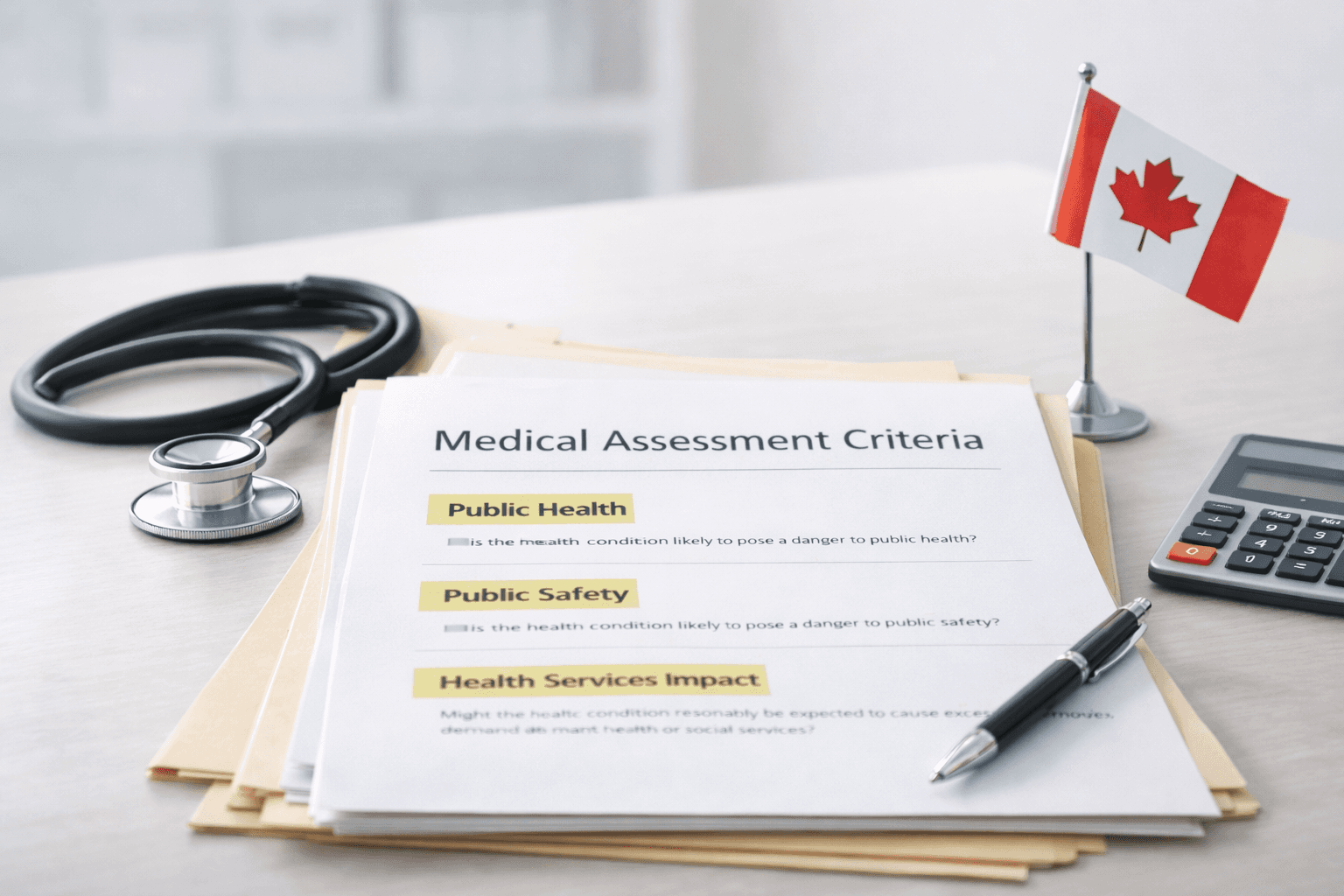
Worried your immigration application could be refused for medical reasons in Canada? This guide explains IRCC medical inadmissibility rules, what panel physicians assess during an immigration medical exam, and what happens if concerns are identified.
Many applicants worry after completing their immigration medical exam whether their application could be refused for medical reasons. While people often refer to this as “failing” the immigration medical exam, Immigration, Refugees and Citizenship Canada (IRCC) uses the term medical inadmissibility.
In most cases, applicants who complete an immigration medical exam with a panel physician are found medically admissible. However, under Canadian immigration law, IRCC may refuse an application if a person is found medically inadmissible due to concerns related to public health, public safety, or excessive demand on health or social services.
This guide explains when an immigration application can be refused for medical reasons, what IRCC looks for during the immigration medical exam, how panel physicians such as GTA Immigration Physicians are involved, and what may happen if concerns are identified.
What Is Medical Inadmissibility in Canada?
Medical inadmissibility refers to a determination by IRCC that an applicant does not meet Canada’s medical admissibility requirements.
According to official IRCC guidance, a person may be found medically inadmissible if their health condition:
Is likely to pose a danger to public health
Is likely to pose a danger to public safety
Might reasonably be expected to cause excessive demand on Canada’s health or social services
These assessments are made by IRCC medical officers after reviewing the results of the immigration medical exam submitted through e-Medical by a designated panel physician.
It is important to understand that panel physicians do not make admissibility decisions. The role of the panel physician is to conduct the immigration medical exam and submit accurate medical findings. IRCC makes the final determination.
If you would like to understand how the immigration medical exam works from start to finish, you can review our Comprehensive Guide to Immigration Medical Exams.

What Does the Immigration Medical Exam Include?
When you attend an immigration medical exam with an IRCC-approved panel physician such as GTA Immigration Physicians, the assessment generally includes:
A review of your medical history
A physical examination
Blood tests for certain age groups
A chest X-ray for certain age groups
All findings are submitted electronically using e-Medical, the online medical reporting system used by IRCC.
For a detailed breakdown of required tests, see Medical Tests Done During an Immigration Medical Exam in Canada (2025 IRCC Requirements).
The purpose of the immigration medical exam is not to deny entry for minor or well-managed conditions. Rather, IRCC evaluates specific risks defined in immigration legislation.
Public Health Concerns
IRCC assesses whether an applicant’s condition could pose a danger to public health in Canada.
One example commonly discussed is active tuberculosis. If an abnormality appears on a chest X-ray during the immigration medical exam, IRCC may request additional testing before making a final decision.
Receiving additional test instructions does not automatically mean refusal. It may result in what is known as a furtherance request. You can read more about that process in IRCC Medical Furtherance Letter Explained: What Happens If IRCC Needs More Tests?
Past, treated conditions are not automatically grounds for refusal. IRCC evaluates current medical evidence carefully.
Public Safety Concerns
IRCC may also consider whether a condition is likely to pose a danger to public safety.
This could include medical conditions that may result in unpredictable or sudden incapacity in certain circumstances. Each case is assessed individually based on medical documentation and risk factors.
The panel physician conducting your immigration medical exam documents findings objectively. IRCC medical officers then review that information in the context of admissibility criteria.
Excessive Demand on Health or Social Services
The concept of excessive demand is often the most complex and misunderstood aspect of medical inadmissibility.
IRCC may assess whether a person’s health condition might reasonably be expected to cause excessive demand on publicly funded health or social services in Canada. This typically involves analyzing anticipated costs of care over a defined period.
Excessive demand assessments are generally more relevant to certain permanent residence categories and may not apply equally to all immigration streams.
For a deeper explanation of how excessive demand is evaluated, you can review Understanding Medical Inadmissibility in Canada: What to Expect From Your IRCC Immigration Medical Exam.
Does a Medical Furtherance Mean Refusal?
No.
If IRCC requires additional tests after reviewing your immigration medical exam, this is referred to as a medical furtherance. It simply means IRCC needs more information before making a final determination.
Furtherance requests may involve:
Repeat chest X-ray
Additional blood tests
Specialist reports
Sputum testing
Updated medical documentation
Panel physicians such as GTA Immigration Physicians follow IRCC instructions carefully and submit updated findings through e-Medical.
Many applicants who receive a furtherance request are ultimately found medically admissible once additional information is reviewed.
Common Myths About Refusal for Medical Reasons
There are several myths about immigration medical exams in Canada.
Myth: Any chronic illness leads to refusal.
Reality: Many applicants with chronic conditions are approved, particularly when the condition is stable and well managed.
Myth: Mental health conditions automatically cause refusal.
Reality: IRCC evaluates each case individually. Many applicants with managed mental health conditions are found medically admissible.
Myth: Receiving additional test instructions means your application will be refused.
Reality: A medical furtherance is part of the standard review process in some cases.
Myth: The panel physician decides whether your application is refused.
Reality: Panel physicians conduct the immigration medical exam and submit results. IRCC medical officers make admissibility decisions.
Can You Respond If IRCC Raises Concerns?
If IRCC identifies potential medical inadmissibility, applicants may receive communication outlining concerns and may be given an opportunity to provide additional documentation.
This could include:
Updated medical reports
Specialist opinions
Evidence of effective treatment
Clarification of prognosis
Because this stage involves immigration law considerations, applicants facing possible refusal for medical reasons should consider consulting a licensed immigration professional for legal advice.
The panel physician’s role remains limited to conducting and reporting the immigration medical exam.
Does a Refusal for Medical Reasons End Your Immigration Journey?
The impact of medical inadmissibility depends on:
The immigration program under which you applied
The specific medical concern identified
Whether exemptions or mitigation measures apply
Some immigration streams may have different admissibility considerations. Others may allow for responses or additional documentation.
Medical admissibility is assessed on a case-by-case basis, and outcomes vary depending on individual circumstances.
How to Prepare for Your Immigration Medical Exam
While you cannot control every medical finding, you can prepare appropriately.
Before attending your immigration medical exam with a panel physician:
Bring valid identification
Bring your IRCC medical request letter if applicable
Bring relevant medical records
Bring specialist reports if you have a known condition
Provide a complete and accurate medical history
For a full checklist, see What to Bring to Your Immigration Medical Exam in Canada.
Providing accurate information allows the panel physician to document findings clearly for IRCC review.
How Long Does Medical Review Take?
After your immigration medical exam is completed and submitted through e-Medical, IRCC reviews the results as part of overall application processing.
Timelines vary depending on:
Application type
Whether additional tests are required
IRCC processing volumes
For a broader timeline overview, see How Long Does the IRCC Immigration Medical Exam Take? | Full Timeline Guide for Canada.
Immigration Medical Exams in the Greater Toronto Area
If you are required to complete an immigration medical exam, it must be conducted by an IRCC-designated panel physician.
GTA Immigration Physicians is an IRCC-approved panel physician clinic serving applicants across Toronto, North York, Scarborough, Markham, Richmond Hill, Ajax, Pickering, Whitby, Mississauga, and Brampton.
The clinic provides:
Physical examination by a panel physician
On-site blood work when required
On-site chest X-ray when required
Electronic submission through e-Medical
Completing your immigration medical exam at a designated panel physician clinic ensures that results are transmitted in accordance with IRCC standards.
Key Takeaways
Can your immigration application be refused for medical reasons in Canada? In some cases, yes — if IRCC determines that a condition poses a danger to public health, public safety, or may cause excessive demand on health or social services.
However:
Most applicants are found medically admissible.
Receiving additional test instructions does not automatically mean refusal.
Panel physicians conduct immigration medical exams, but IRCC makes admissibility decisions.
Each case is assessed individually under Canadian immigration law.
Understanding the medical admissibility framework can help reduce unnecessary anxiety and ensure you are prepared for the immigration medical process.
Disclaimer
This article is provided for general informational purposes only and does not constitute legal, immigration, or medical advice. Medical admissibility decisions are made by IRCC based on individual circumstances and applicable Canadian immigration law. Applicants with concerns about potential medical inadmissibility should consult official IRCC guidance or seek advice from a licensed immigration professional. Immigration medical exams must be completed through an IRCC-designated panel physician when required.